
There’s a new term floating around: AI;DR.
It’s a twist on TL;DR (“too long; didn’t read”), but aimed at AI-generated content. The implication is pretty clear:
“If AI wrote it, I’m not interested.”
I understand the instinct.
But I think it misses the point entirely.
The Only Question That Matters
When somebody with a problem to solve lands on a post, whether it’s on my site, your site, or Substack, they’re not asking:
• Was this written by a human?
• Was this written by AI?
They’re asking something much simpler:
“Did this help me?”
That’s it.
If a piece:
• reads clearly
• answers the question
• respects the reader’s time
• and doesn’t feel like a slog
then it’s done its job.
And if AI helped produce that result?
Fine.
AI Is a Tool—Not a Verdict
We’ve seen this before.
• Calculators didn’t ruin math
• Spellcheck didn’t ruin writing
• Word processors didn’t ruin publishing
They just changed the workflow.
AI is doing the same thing.
Used well, it can:
• organize scattered thoughts
• tighten clunky sentences
• help explain something more clearly
• speed up the path from idea to usable content
Used poorly, it can:
• produce bland, generic writing
• miss nuance
• sound stiff or unnatural
• give you something that just feels…”off”
But that’s not an AI problem.
That’s a usage problem.
The Real Standard: Reader Experience
Here’s my position, plain and simple:
If the reader has a good experience, it’s good writing.
If the reader has a bad experience, it’s bad writing.
How it got created is secondary.
Let’s look at two scenarios:
Scenario 1: AI Used Well
You use AI to:
• outline your thoughts
• refine your wording
• clarify your explanation
You review it, adjust it, and publish something that:
• sounds natural
• delivers value
• actually helps someone
Result: It’s a win, for you and the reader.
Scenario 2: AI Used Poorly
You generate a piece and:
• leave in awkward phrasing
• ignore obvious stiffness
• publish something you know isn’t quite right (or, if you don’t have a discerning eye or ear, you just can’t tell)
Result:
The reader feels it. Trust drops. They leave.
That outcome deserves rejection. But not because AI was involved.
Because the final product wasn’t good enough.
The AI + Human Combination
The real shift isn’t AI vs. human.
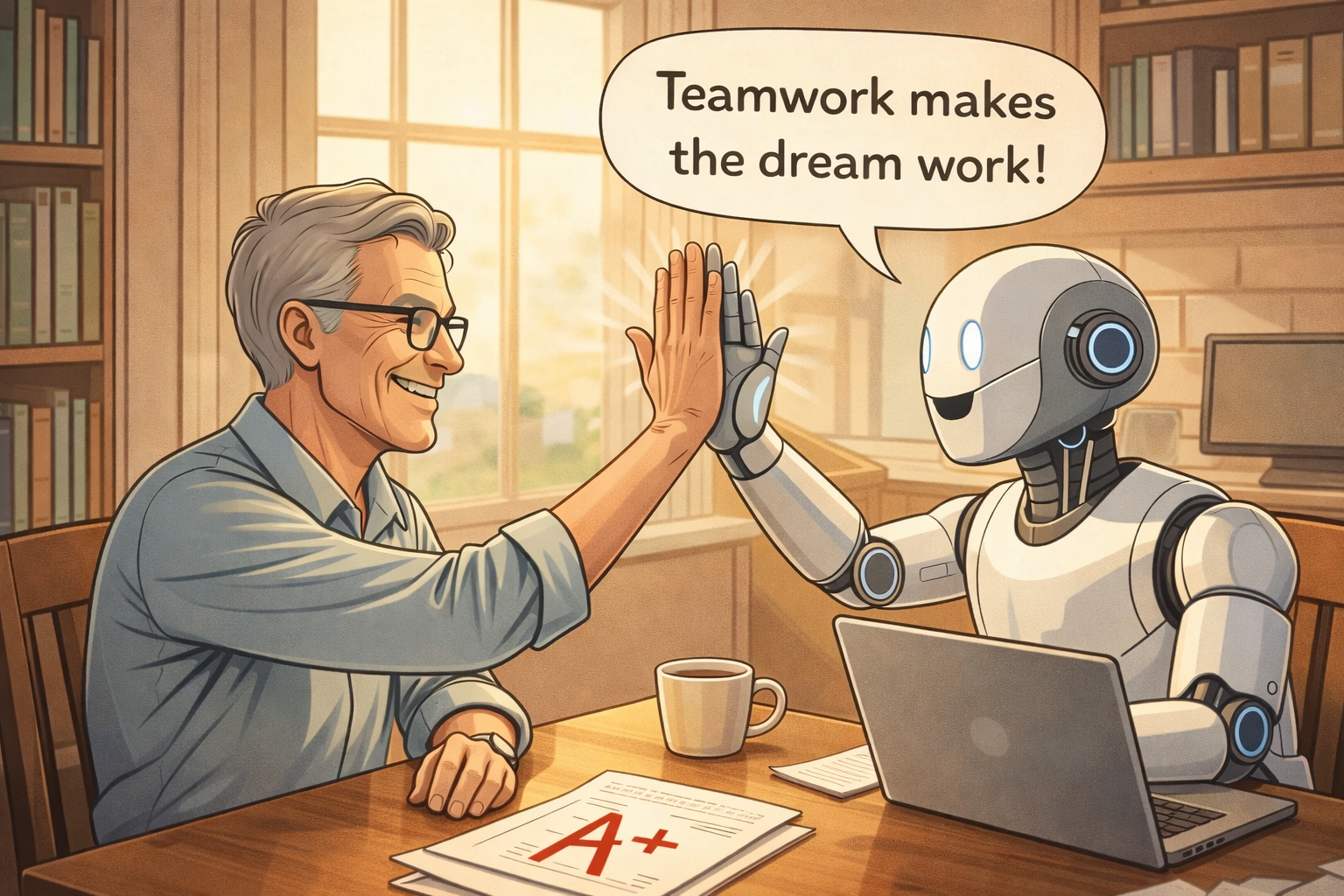
It’s AI plus human.
Think of it this way:
AI = speed, structure, raw output
Human = judgment, taste, responsibility
If you skip the human part, then yes, things get sloppy.
But if you use both?
You can produce:
• clearer explanations
• faster publishing cycles
• more helpful content
And for someone building something online, that matters. Especially later in life, when you’re working without a big team.
A Practical Standard You Can Use
If you’re ever unsure whether to publish something (AI-assisted or not), ask:
• Would I actually read this myself? Would it sound awkward?
• Does this feel clear and easy?
• Would someone new to this topic feel helped?
• Does anything feel off or lazy?
If the answers are solid, publish.
If not, fix it.
No philosophical debate required.
Final Thought
AI;DR sounds clever.
But it puts the focus in the wrong place.
Readers don’t care how the sausage was made.
They care whether it’s worth eating.
If AI helps you serve something useful, clear, and honest, use it.
If it doesn’t, don’t.
That’s the whole game.
Follow Along (If This Interests You)
I’ll be testing a number of AI tools over the coming weeks, especially those that claim to help with things like writing, publishing, and simple online projects.
Where it’s helpful, I’ll share:
• raw or lightly edited outputs
• my own edits and adjustments
• what worked (and what didn’t)
In some cases, I may link out to a Google Doc so you can review longer samples without cluttering the post.
The idea isn’t just to show what AI produces—it’s to show what a usable result actually looks like… and how much human input it takes to get there.
If a tool holds up under real use, I’ll say so.
If it doesn’t, I’ll say that too.