
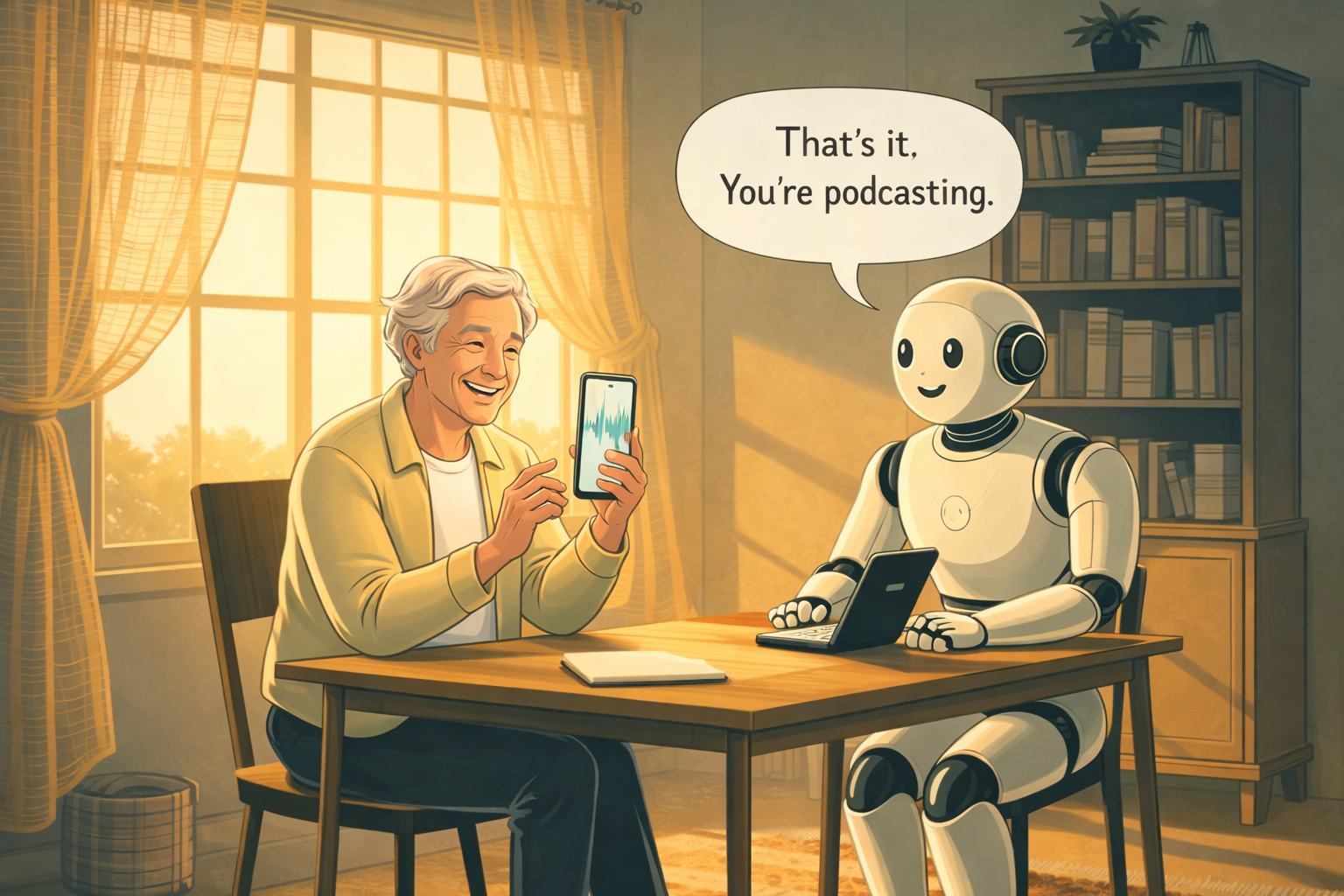
Podcasting is one of the most overlooked content channels for people building an online business.
While most beginners fight for attention on crowded platforms like Facebook and YouTube, podcasting offers something rare — a captive audience that chooses to listen for 10, 20, or even 60 minutes at a time.
No algorithm decides whether your content gets seen.
Subscribers get every episode automatically.
And here’s something especially worth noting:
If you’ve spent years explaining things, telling stories, or helping others — you’re already qualified to host a podcast.
Why Podcasting Is a Great Fit (Especially If You Prefer Simplicity)
Podcasting plays to strengths many people already have.
You don’t need:
- Video editing skills
- Graphic design experience
- Fancy tech setups
You just need your voice and something useful to share.
By the way, if you’re a senior marketer (or just someone who prefers straightforward tools), podcasting can feel refreshingly simple compared to most online platforms.
Even better — the barrier to entry is incredibly low.
You can:
- Record on your phone
- Edit with free software
- Distribute everywhere — for free
If you can have a conversation, you can start a podcast.
Choosing Your Podcast Format and Topic
Before recording, pick a format that fits your style.
Simple Formats to Start With
Solo Episodes (Best for beginners)
- Just you talking through a topic
- No scheduling or coordination
- Fastest to produce
Interview Style
- Bring in guests
- Adds variety and fresh perspectives
- Can help grow your audience through collaboration
Hybrid Format
- Mix solo + interviews
- Flexible and realistic for busy schedules
A hybrid approach works especially well if your time or energy varies week to week.
Choosing Your Topic
Your podcast should match your overall content direction.
If your site helps beginners over 50 learn online marketing, your podcast should do the same.
Consistency builds trust and strengthens your brand.
Ask yourself:
- Who am I helping?
- What problems am I solving?
- What do I already know that others need?
Naming Your Podcast
Clarity beats cleverness.
Examples:
- “Marketing After 50”
- “The Senior Side Hustle Show”
These tell listeners exactly what to expect.
Recording Your First Episode (No Equipment Needed)
Start with what you already have — your smartphone.
Simple Setup
- Find a quiet room
- Place your phone about 6 inches away
- Hit record
That’s it.
Keep It Natural
Speak like you’re talking to a friend.
No “radio voice” required.
Authenticity beats polish — every time.
Keep Episodes Short (At First)
Aim for:
- 8–15 minutes
This makes it:
- Easier to record
- Faster to edit
- More approachable for listeners
Use a Simple Outline
Before recording, jot down:
- Intro (1–2 sentences)
- 3–5 key points
- Closing (call to action)
Think of it as a roadmap — not a script.
Optional Upgrade (Later)
If you want better audio:
- Budget mics like ATR2100x or Samson Q2U work well
But again — not required.
Editing Your Podcast (Free Tools Only)
Use Audacity (free, beginner-friendly).
You only need to:
- Trim the start and end
- Remove long pauses
- Fix obvious mistakes
Don’t over-edit — natural is better than perfect.
Add a Simple Intro & Outro
Intro (15–30 seconds):
- Who you are
- Who the show is for
- What they’ll learn
Outro:
- Thank listeners
- Mention your website or freebie
- Ask for a review
Export Settings
- Format: MP3
- Quality: 128 kbps
Good balance of quality and file size.
Publishing Your Podcast Everywhere
You’ll need a hosting platform.
Good Free Options
- Spotify for Podcasters (formerly Anchor)
- Buzzsprout
- Podbean
Upload once → distributed everywhere.
One-Time Setup
Submit your show to:
- Apple Podcasts
- Spotify
- Amazon Music
After that:
- Every episode auto-publishes
Write a Clear Description
Example:
“A podcast helping beginners over 50 build simple, ethical online income streams.”
Clear beats vague every time.
Growing Your Audience (Without Overwhelm)
Start with what you already have:
- Email list
- Blog
- Social posts
Simple Growth Tactics
- Ask for reviews in each episode
- Collaborate with other podcasters
- Share in relevant communities (with context, not spam)
Stay Consistent
One episode per week is enough.
Consistency builds:
- Listener habits
- Platform visibility
- Trust
Repurpose Your Content
Each episode can become:
- A blog post
- Social posts
- Email content
One piece of content → multiple uses
Monetizing Your Podcast (The Smart Way)
Your podcast doesn’t need ads to make money.
Its real job is:
Build trust → lead to action
Simple Monetization Paths
- Promote your lead magnet
- Mention your own products
- Recommend tools (affiliate links)
Podcast listeners often convert better because:
- They already trust you
- They’ve spent time with you
Long-Term Opportunities
- Sponsorships (later)
- Premium content
- Memberships
But early on — focus on:
Audience quality, not size
Why Podcasting Is So Powerful
Podcasting gives you something rare:
Uninterrupted attention
People listen while:
- Driving
- Walking
- Cooking
That creates a deeper connection than most content.
Your First Step (This Week)
Don’t overthink this.
Do this instead:
- Pick a simple topic
- Write 3–5 bullet points
- Grab your phone
- Hit record
That’s it.
Looking Ahead (because time will fly!)
Every episode you publish becomes a long-term asset.
Unlike social posts that disappear:
- Podcast episodes keep working
- Keep getting discovered
- Keep building trust
One episode per week = 50+ assets in a year